The joint fails first, and that is by design
A brick chimney is built so the mortar gives up before the brick does. Mortar is meant to be the softer, cheaper, replaceable part. When the joints sand out, crack or fall away in chunks, that is the wall doing what it was built to do, and renewing those joints is far cheaper than replacing brick. The question an owner faces is whether the brick behind those joints is still good. If it is, the job is repointing. If it is not, the job is a rebuild of the courses that have let go.
At Eckert Chimney Company in Monterey Park we get asked this on almost every masonry visit, so here is how we decide, what each path involves and what each costs.
What repointing actually is
Repointing, also called tuckpointing, renews the outer depth of each joint. The mason cuts out the weathered mortar with a grinder or a plugging chisel until firm mortar shows, brushes and wets the slot, then presses fresh mortar in with a narrow trowel in layers, and tools the face to match the joint profile on the rest of the house: concave, flush, raked or weathered.
The skill is in three places:
- Depth. Cutting too shallow leaves a thin skin that pops off. Cutting too deep loosens the brick.
- Mix. The new mortar has to be weaker than the brick and close to the old mortar in hardness. A soft 1920s brick laid in lime mortar is ruined by a stiff portland mix, because the brick takes the stress instead of the joint.
- Colour and profile. A repointed band that is grey on a buff chimney, or flush where the rest is concave, reads as a patch from the street for decades.
What rebuilding is
Rebuilding means taking whole brick down, course by course, to the level where the units are tight and sound, then laying new or salvaged brick back up on a fresh bed. It is the answer when the brick itself has failed: faces spalled off, units that rock in their beds, a top that leans, or a stack that has opened a crack at the roofline. On older unreinforced chimneys a rebuild is also the moment to add reinforcing steel and a proper crown. Our rebuild pricing guide covers that side in more detail.
How we tell which one you need
We do not decide from the ground. On the roof we check:
- Do the bricks move? We press on units and tap them. A unit that rocks or sounds dull is detached from its bed.
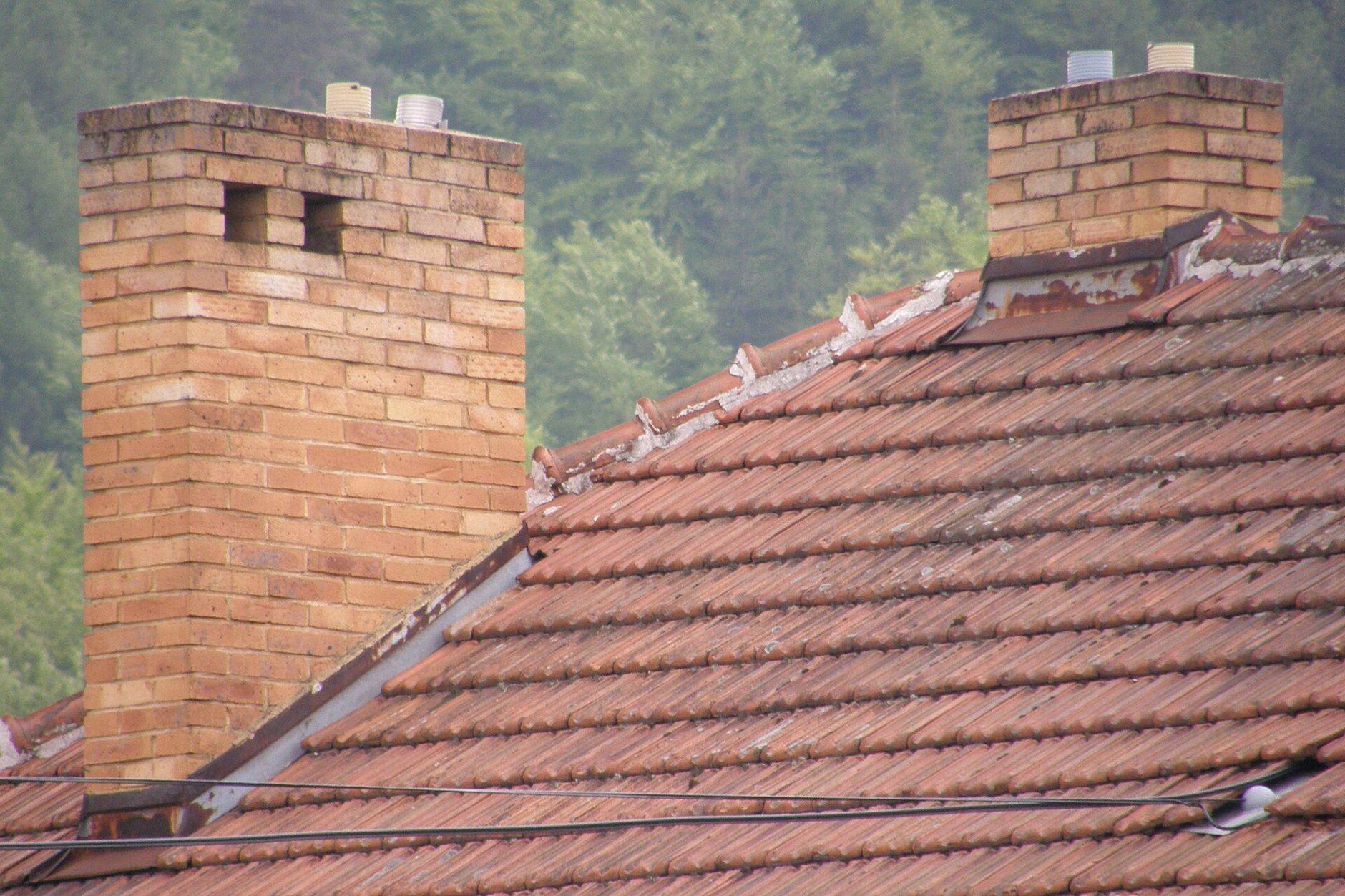
- Are the faces intact? Spalling, where the hard outer face of a brick has flaked off, means water has been freezing or salts have been working inside it. A few spalled units can be cut out and replaced; a whole band of them means taking that band down.
- Is the stack plumb? We sight it against a level. A lean or a horizontal crack through several courses is a structural sign.
- How deep is the bad mortar? If a pick goes in an inch and stops, that is a repoint. If it goes through the joint, that is a rebuild.
- What is below the roof? In the attic and with a camera in the flue we look for the same failures out of sight.
Many chimneys need a mix: the top few courses rebuilt, the rest repointed. That is often the lowest total.
Side by side
- Repointing: keeps the original brick, keeps the look, quieter and shorter on the roof, and renews the joints so water stops getting in. It does not fix loose or broken brick and does not add strength.
- Partial rebuild: replaces the failed upper courses, allows steel and a new crown, and leaves sound lower brick alone. More hours and a brick match to source.
- Full rebuild: for stacks that are failing all the way down or have been badly damaged by a quake or a chimney fire. The longest job, with the most material.
What sets the cost
Neither repointing nor rebuilding carries a set figure on this site, because the square footage of failed joints and the number of loose courses decide them. We measure on the visit and put it on paper. What does carry a figure:
- Level 2 inspection with a full camera run of the flue, which tells us whether the inside matches the outside: $385
- Basic Level 1 visual check: $54
- Water tracing and repair, when a leak brought you to the masonry in the first place: $550 to $3,300
- A cap to keep rain off the new work: quoted after we measure
The written proposal separates the repointing area, any courses to be rebuilt, and the top. You can see what each piece adds and choose.
Ask for a masonry visit and tell us whether you see open joints, loose brick on the roof or a lean, and roughly when the house was built.
Mistakes we get called back to fix
- Fresh mortar smeared over old joints without cutting them out first. It looks fine for a winter, then sheets off.
- A clear sealer brushed onto failing joints to stop a leak. The joint still lets water in behind the film.
- Grey portland repointing on soft red brick, with the brick faces now cracking beside every joint.
- A rebuilt top laid with no flashing work, so the leak that prompted it carries on.
Monterey Park brick and the weather here
We do not get hard freezes in Monterey Park, so the classic frost damage of colder places is rare. What we see instead is winter rain soaking poorly capped tops, summer heat cycling the masonry, and quake movement over the years opening joints near the roofline. Those wear patterns favour repointing on many stacks, with rebuilds where the top has been shaken loose. Our masonry repair page and our chimney rebuild page set out each job.
Getting a straight answer for your chimney
The contact page is where to start. Say what you have noticed on the brick and the age of the house, and we will set a visit, test the joints and courses on the roof, and give you a proposal that says repoint, rebuild or both.
Put an Eckert Mason on Your Chimney
We test the joints, read the brick and the crown, look at the flashing and the flue, then write a scope that names the material, the method and the price. Our crews work from Monterey Park across Montebello, Bell Gardens and the city of Los Angeles.