Where brick chimneys break when the ground moves
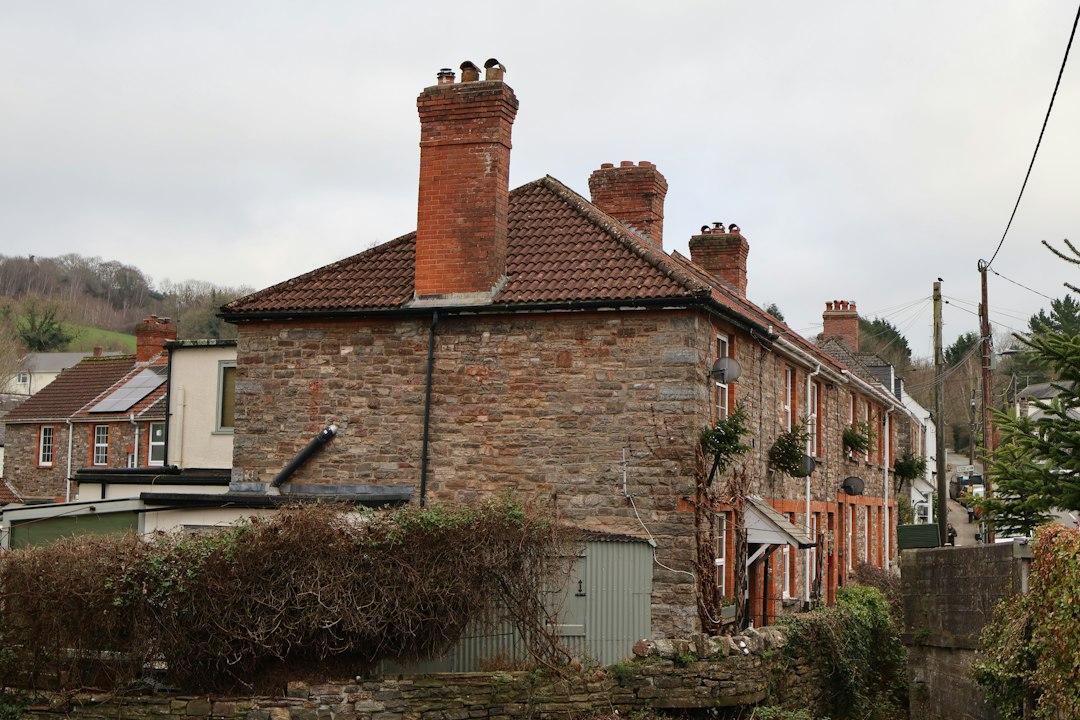
Unreinforced brick is strong when you press down on it and weak when you push it sideways. A chimney stack above the roof is a tall stack of brick and mortar with nothing but its own weight holding it together, standing on a house frame that sways in a quake. When the frame moves one way and the stack wants to stay put, the joints at the roofline take the strain. That is where most damaged chimneys in Southern California crack through, and where the top section can topple onto the roof, a driveway or a neighbor's yard. Eckert Chimney Company works on brick chimneys across Monterey Park, a city close to where the 1987 Whittier Narrows earthquake struck, and the cracked joint just above the shingles is one of the most common things we find on older stacks here.
Who should think about bracing
Bracing is worth pricing if your house has:
- A brick chimney built before steel reinforcing became normal practice, which covers most stacks on houses from the 1950s and earlier.
- A tall stack above the roof, or one on an outside wall next to a path, a driveway or a bedroom.
- Old repairs at the roofline: patched joints, a band of mortar in a different colour, a crack that has been filled.
- A stack that sits loose against the wall, with a gap that you can see or that keeps reopening after it is caulked.
The options, in plain terms
There is no single kit for every chimney. These are the general approaches, and many jobs combine more than one.
- Rebuild the top with steel in it. The brick above the roof, often the loosest part, comes down and goes back up with vertical reinforcing bars set in grout and a new crown. The rebuilt section is much less likely to come apart in shaking. On some houses the upper section is rebuilt in a lighter material and finished to look like brick.
- Tie the stack to the house. Steel angles or straps fixed around the chimney and anchored into the roof and ceiling framing, so the house and the stack stay together as they move.
- Brace it from the roof. A steel frame fixed to the stack and anchored to the roof framing, to resist sideways movement above the roofline.
- Take it down and replace it. When the masonry is failing all the way down, or the fireplace is no longer used, the brick can come down to the firebox or below and be replaced with a framed chase and a metal flue system, or closed off altogether.
Which mix fits your house depends on the brick, the height, what the fireplace is used for and how the roof and ceiling are framed. We explain each option for your chimney in the proposal, with the reasons.
What we check before recommending anything
- The condition of the brick and joints above the roof. Steel ties on loose brick do little. If the joints are sanded out or units rock in their beds, those courses get rebuilt before or as part of the bracing.
- The roofline joint. Any crack through the full width of the stack at the roof.
- The connection to the house. In the attic we look for any existing straps and for a gap between the chimney and the framing.
- The flue. A camera shows whether past shaking has cracked or shifted the flue tile inside, which matters for whether the fireplace can still be used.
- The roof. Pitch, material and how the framing runs, because bracing and ties have to anchor into solid wood.
What it costs
Seismic work has no posted figure on this site. The height of the stack, how much brick needs rebuilding, how the ties anchor and the roof material all change it. Some parts of the job do carry a figure:
- Level 2 inspection with a camera run up the full flue, so you know what the inside looks like before you spend money on the outside: $385
- Leak tracing and repair where an old roofline crack has been letting water in: $550 to $3,300
- A new cap on the rebuilt top: quoted after we measure
The proposal splits the work into parts, such as top rebuild, ties, bracing and cap, so you can see what each adds and choose. We do not promise any rebate or program approval; if you plan to apply for one, check its rules before we start.
Request a seismic visit and tell us how tall the chimney stands above the roof, whether it is on an outside wall and if it has been repaired after a past quake.
After a quake
If a quake has just shaken the house, stay out from under the chimney and keep people and cars away from where it could fall. Do not light the fireplace until someone has checked the flue: a cracked tile you cannot see from the room can let heat and smoke into the wall. We inspect after shaking, write up the damage with photos for you and your insurer if you need them, and set out what has to be done before the fireplace is used again.
Planning ahead in Monterey Park
The time to brace a chimney is before the next strong quake, when the work can be planned and the brick is still where it was laid. Owners in Monterey Park, Montebello, Bell Gardens and nearby Los Angeles neighborhoods often combine bracing with work they already need, like a crown or a leak repair, so the scaffold only goes up once. See the seismic retrofit page for how we approach the work, and the rebuild pricing guide if your top section needs to come down.
Start with a look at the stack
Visit the contact page and tell us about the chimney and what worries you about it. We will come out, look at the brick from the roof and the attic, and write up the bracing options that fit your house.
Put an Eckert Mason on Your Chimney
We test the joints, read the brick and the crown, look at the flashing and the flue, then write a scope that names the material, the method and the price. Our crews work from Monterey Park across Montebello, Bell Gardens and the city of Los Angeles.